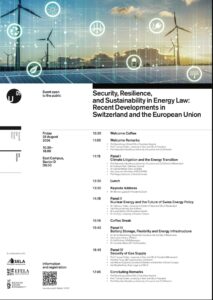

ANNUAL WORKSHOP 2026: REPORT: 𝗦𝗲𝗰𝘂𝗿𝗶𝘁𝘆, 𝗥𝗲𝘀𝗶𝗹𝗶𝗲𝗻𝗰𝗲, 𝗮𝗻𝗱 𝗦𝘂𝘀𝘁𝗮𝗶𝗻𝗮𝗯𝗶𝗹𝗶𝘁𝘆 𝗶𝗻 𝗘𝗻𝗲𝗿𝗴𝘆 𝗟𝗮𝘄

RECENT DEVELOPMENTS IN SWITZERLAND AND THE EUROPEAN UNION

28 August 2026 – Università della Svizzera italiana, Lugano, Switzerland

The 2026 Annual Meeting of the Swiss Energy Law Association (SELA), organised in cooperation with the Center for Law and Sustainability at the University of Lucerne, brought academics, regulators, practitioners and energy-sector representatives to USI’s East Campus in Lugano on 28 August.

Werner Luginbühl, President of the Swiss Federal Electricity Commission (ElCom), opened the substantive programme with a keynote on the fundamentals of the Swiss electricity system and the importance of a Swiss-EU electricity agreement. From there, the meeting moved across a deliberately broad set of questions: climate litigation, nuclear policy, battery storage, gas security and Switzerland’s place in the European electricity market.

What connected these otherwise different subjects was a practical concern that surfaced repeatedly over the course of the day. The energy transition is no longer simply a matter of fixing a decarbonisation target and identifying the technology that can deliver it. Reliability, infrastructure, market design, legal competence and investment increasingly have to be considered together, often within the same regulatory or contractual problem.

WELCOME REMARKS

Opening Remarks

Professor Ilaria Espa of the Università della Svizzera italiana (USI), Lugano, Secretary-General of SELA and organiser of the Annual Meeting, welcomed around 50 participants to the University’s new premises in Lugano. Together with her team, she thanked those present for taking part and for their continued engagement with SELA’s work.

Professor Thomas Cottier of the University of Bern, President of SELA, began by questioning the usefulness of some of the divisions through which energy lawyers habitually organise their work. Public law, private law, commercial law, European law and international law remain distinct fields, he noted, but the problems generated by the energy transition rarely respect those boundaries.

A climate claim may start with ordinary tort doctrine and quickly engage human-rights law; access to an electricity network may turn on regulation, market design and contract at once. Cottier did not suggest that established legal categories had lost their value. His point was rather that they no longer provide self-contained explanations of the underlying problems. He also welcomed the strong in-person attendance, encouraging participants to make use of the informal exchanges that tend to disappear in online formats.

Professor Sebastian Heselhaus of the University of Lucerne, Director of the Center for Law and Sustainability, placed the same issue in a broader political setting. Climate regulation is meeting stronger resistance just as energy security has returned to the centre of public debate. For Heselhaus, these developments should not be treated as separate pressures. They instead sharpen the question of what a sustainable energy policy must be capable of delivering in practice. Cost, reliability and implementation are therefore not external objections to sustainability; increasingly, they are among the conditions on which climate policy depends for its political and legal credibility.

PANEL I

Climate Litigation and the Energy Transition

Dr Andreas Hösli (Kellerhals Carrard), Dr Gabriel Webber Ziero (Swiss Re), Johannes Wendland (HEKS/EPER) and Professor Angus Johnston (University of Oxford) approached climate litigation from private-law, corporate, comparative and regulatory perspectives.

Much of the discussion turned on Asmania et al. v Holcim AG. Four residents of the Indonesian island of Pari are seeking emissions reductions and compensation for alleged climate-related harm under Article 28 et seq. of the Swiss Civil Code. The case remains at the procedural stage. The Cantonal Court of Zug allowed the action to proceed, rejecting the proposition that climate policy necessarily falls outside the competence of civil courts and that the claim should be treated as an actio popularis. None of the more difficult merits questions has yet been resolved: causation, damage and the attribution of a legally relevant share of responsibility all remain open. Precisely for that reason, the proceedings offer a useful illustration of how familiar private-law concepts are being tested by cumulative, geographically dispersed and transnational forms of harm.

A different difficulty arises from the regulatory environment in which multinational companies operate. ESG commitments encouraged or required in one jurisdiction may attract antitrust, fiduciary-duty or consumer-law scrutiny in another. The resulting legal exposure makes consistency between public statements, governance arrangements and internal implementation increasingly important. The wider litigation landscape, including Milieudefensie v Shell and Lliuya v RWE, points to the same underlying problem: recognising climate harm in the abstract is only one step. Courts and regulators must still translate global objectives into company-specific duties and into rules of attribution that can operate within existing legal frameworks.

The exchange repeatedly came back to ordinary legal reasoning rather than to a wholly new body of climate law. Individual loss, causation and responsibility remain central even when the factual setting is global. Yet the hierarchy of norms and the timing of intervention can alter the legal analysis considerably. Climate objectives with constitutional or EU-law force may constrain regulatory choices differently from discretionary mandates; similarly, consultation and regulatory design may offer a more effective point of intervention than judicial review once a measure has already been adopted.

KEYNOTE ADDRESS

Swiss Electricity Security and the European Dimension

Werner Luginbühl then shifted attention from litigation to the physical operation of the electricity system. Switzerland consumes roughly 60 TWh of electricity each year, but the annual total masks a marked seasonal imbalance. Summer production commonly leaves a surplus, whereas winter brings a need for imports. In winter 2025/26 those imports reached almost 7 TWh, partly because the Gösgen nuclear power plant was unavailable.

For Luginbühl, that seasonal pattern is the reason annual self-sufficiency can be a misleading measure of security of supply. What matters is not only the volume produced over twelve months, but whether enough energy and capacity are available when the system is under the greatest strain.

His assessment of renewable expansion was similarly nuanced. Rooftop solar has grown quickly, adding roughly 5 TWh over five years, while progress elsewhere has been slower. Alpine photovoltaic projects have faced questions of profitability and local acceptance; hydropower remains procedurally demanding; wind development continues at a modest pace. Luginbühl referred, with some humour, to the succession of federal ‘Express’ measures designed to accelerate energy infrastructure. The underlying point was less light-hearted: legislation can shorten procedures more readily than it can solve the financing, authorisation and construction challenges of major infrastructure.

Storage raises a different set of questions. Batteries can shift photovoltaic production over several hours, respond rapidly to price signals and provide short-term balancing services, and Luginbühl therefore regarded them as an important part of the future system. Their limits are equally important, however. They do not replace seasonal storage, while Swiss reservoirs operate on an entirely different scale. A system with a larger share of variable generation will still need dispatchable capacity and reserves. Treating all forms of storage as a single regulatory category can consequently obscure the fact that they perform very different functions.

The European dimension occupied a substantial part of the keynote because Switzerland is physically embedded in the continental electricity network even though it has remained outside important European market-coupling and regulatory processes. The result is an increasingly uncomfortable asymmetry: Swiss operators are affected by rules and coordination mechanisms over which Switzerland has limited influence. Luginbühl therefore presented an electricity agreement with the European Union as both an economic and an institutional issue. In his account, an agreement would strengthen import possibilities, access to balancing platforms, regulatory information and participation in the structures through which cross-border electricity is already managed. Cottier picked up the institutional point in the discussion, observing that integration also means being represented where relevant decisions are taken. For a country at the centre of the European grid, resilience cannot be reduced to national self-sufficiency.

PANEL II

Nuclear Energy and the Future of Swiss Energy Policy

Dr Kateryna Holzer (University of Eastern Finland and SELA), Pascal Hachem (Bär & Karrer), Dr Kim Fyhr (University of Eastern Finland) and Lukas Mühle (GW Innovations GmbH) examined nuclear energy through the lenses of legal policy, investment, waste management, technology and security of supply.

The starting point was political as much as legal: the different responses to Chernobyl and Fukushima provided the background to a discussion of the Swiss framework. Existing Swiss reactors have no fixed statutory closure date. Their licences are open-ended, and continued operation depends on compliance with safety requirements under ENSI supervision. The present prohibition concerns new general licences for new nuclear power plants. That distinction becomes more consequential as expected operating lives lengthen and existing plants are increasingly discussed as a bridge while replacement capacity develops.

Finland offered a useful contrast: there, nuclear generation and renewables have expanded alongside one another, while the Mankala model shows how industrial and utility shareholders can share generation costs. Even so, political acceptance and a supportive legal framework do not eliminate the financing difficulties associated with new nuclear construction. The Olkiluoto repository illustrated another feature of the sector: its extraordinary time horizon. Developed over decades, with sustained local engagement and an effective municipal veto, it showed how deeply questions of nuclear policy can depend on long-term institutional and local consent.

Finally, small modular reactors may gain advantages from standardisation and factory production; fusion, by contrast, continues to make scientific progress without yet resolving the engineering challenge of commercial electricity generation. The discussion of cost overruns in large projects also resisted a purely technological explanation. Design maturity, specialised suppliers, contracting structures and project management all matter. Nuclear fuel itself is comparatively easy to stock, but dependencies remain in fabrication and specialised components, another reason why Swiss energy security cannot be assessed in isolation from the wider European system.

PANEL III

Battery Storage, Flexibility and Energy Infrastructure

Dr Moritz Wüstenberg (Streamtech Solutions AG and SELA), Louise Kavacs (50Hertz), Dr Rolf Endriss (AEM Massagno) and Riccardo Albieri (DXT Commodities) focused on the regulatory and contractual problems created by battery storage.

Batteries sit uneasily within legal categories built around a clearer division between producers and consumers and single installation can draw electricity from the grid, inject it again, provide balancing services and react almost immediately to market prices. The difficulty becomes especially visible where connection capacity is scarce. German experience suggests that a strict first-come, first-served model may tie up valuable capacity in projects that are not sufficiently mature, prompting a move towards a ‘first ready, first served’ approach. Grid-connection law then does more than regulate technical access: in practice, it also allocates a scarce economic resource.

Connection is only the first part of the problem because once batteries are operating, price signals and local network needs may pull in opposite directions: many units may charge or discharge at the same time because the market rewards that behaviour, even where the local grid would benefit from the reverse. Swiss regulation is beginning to respond by limiting the extent to which reinforcement costs can be socialised and by treating flexibility as an asset that generally remains with the owner but can be contracted by the network operator. Used in that way, flexibility may postpone or even avoid some physical grid reinforcement.

These network questions feed directly into contract design: a BESS optimisation agreement has to allocate not only price and output risk, but also practical control over charging, discharging and availability. Dispatch rights, degradation, network constraints, lost availability and changes in market rules can therefore become central bargaining points. The commercial value of storage, as the speakers emphasised, depends not simply on the battery technology itself but on who is legally entitled to use its flexibility, when, and on what terms.

PANEL IV

Security of Gas Supply

Professor Thomas Cottier moderated the final panel with Professor Kim Talus (University of Eastern Finland and University of Helsinki), Brigitta Kratz (Kratz Legal) and Matteo Quadranti (Quadranti & Molteni; Ticino Grand Council). Their discussion moved between the European, Swiss and cantonal dimensions of gas security.

The European experience after 2022 exposed weaknesses in a security model built largely around liberalised markets, diversification and emergency rules. Physical availability was only one part of the crisis; affordability and the ability of states to act in solidarity under simultaneous pressure proved equally important. This led to a distinction between security of supply and resilience. The former asks whether the commodity can be obtained. The latter reaches further, taking account of concentrated supply chains, control over strategic inputs and the capacity of the system to keep functioning when ordinary market assumptions fail. On that view, diversification may carry an additional cost and require public intervention rather than amounting merely to a switch from one supplier to another.

Switzerland is particularly exposed because it produces no natural gas, has no large-scale seasonal storage and does not automatically benefit from EU solidarity arrangements. During the 2022 crisis, this made a combination of federal measures, industry coordination and cross-border solutions necessary. The discussion also underlined how closely gas and electricity security are linked: reserve power plants depend significantly on gas or dual-fuel capability, but they can support the electricity system only if the required fuel is itself available at the moment of stress.

Ticino brought the longer-term infrastructure dilemma into sharper focus since the canton has historically received gas through Italy, while its energy and climate policy foresees a substantial reduction in fossil-gas use. Networks may therefore still need investment to remain reliable at the very moment when their traditional role is expected to decline. Some infrastructure could later be adapted for renewable gases, synthetic methane, hydrogen or other Power-to-X products, but the timing of those choices is delicate. Overinvestment risks locking in assets and uses that policy is seeking to phase down; withdrawing too early could strand infrastructure that might still perform a useful transitional function.

Electrification offers one route away from fossil gas, but it does not make the underlying security problem disappear. It shifts part of the burden onto winter electricity supply, storage and grid capacity. The session nevertheless ended with a clear recommendation to progressively move away from gas and replace it with electricity where the electricity system can accommodate the additional demand.

CONCLUDING REMARKS

Cottier’s closing remarks did not try to compress the day into a single message. Instead, he returned to the points on which uncertainty remains. Climate litigation is moving towards a more recognisable debate about duties to act, but causation, damage and the proper space for political choice are still difficult. On electricity, his position was more definite: he reiterated that an agreement with the European Union is indispensable to Swiss security of supply.

Other sessions pointed to different forms of interdependence. Finland’s experience with nuclear power raised questions about technology neutrality, public acceptance and the consequences of longer operating lives. The battery discussion, meanwhile, showed how closely network physics, market incentives and contractual design have become connected. On gas, Cottier returned to the need to reduce structural dependency where possible, particularly through electrification when the electricity system can absorb the additional load.

Heselhaus closed the circle by returning to the interdisciplinary theme of the opening remarks. None of the issues discussed during the meeting could be understood fully from within a single field of law. Tort doctrine now interacts with human-rights law and climate policy; new technologies produce regulatory and contractual questions at the same time; infrastructure choices cannot be separated from market design or security of supply. Espa added a geographical dimension. Swiss energy law may be exercised through national and cantonal competences, but it operates inside European networks and global supply chains.

Seen together, the sessions made clear that security, resilience and sustainability cannot easily be arranged according to a fixed hierarchy, since measures designed to strengthen one objective may create new pressures elsewhere: greater resilience may come at a higher cost, faster decarbonisation may place additional strain on networks, and infrastructure developed for one stage of the transition may later need to be adapted to a different role. Rather than temporary inconsistencies that will disappear once the right technologies have been identified, these tensions are likely to remain an inherent feature of the energy transition itself.

The legal challenge is therefore to manage this process of continuing adjustment by providing a framework that is sufficiently stable to support investment, coordination and long-term planning, while remaining flexible enough to respond to changes in technology, markets and the physical energy system. It was this need to reconcile stability with adaptation, more than any individual technology, dispute or regulatory question, that ultimately connected the different discussions throughout the meeting.

Written by Katarina Mirkovic (PhD Candidate, Université de Genève)


Links for the materials:

Rolf Endriss – AEM Presentation

Angus Johnston – Presentation

Dr. Hachem – Nuclear Energy in Switzerland

Gabriel – ESG Developments

Hoesli, Asmania et al. – Presentation

Johannes Wendland – Climate Litigation

Louise Sophia Kavacs – Beyond Grid Connection: Integrating BESS into Germany’s Power System
Matteo Quadranti – Gas Supply in Ticino

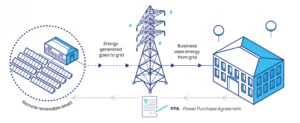
ANNUAL WORKSHOP 2026: 𝗦𝗲𝗰𝘂𝗿𝗶𝘁𝘆, 𝗥𝗲𝘀𝗶𝗹𝗶𝗲𝗻𝗰𝗲, 𝗮𝗻𝗱 𝗦𝘂𝘀𝘁𝗮𝗶𝗻𝗮𝗯𝗶𝗹𝗶𝘁𝘆 𝗶𝗻 𝗘𝗻𝗲𝗿𝗴𝘆 𝗟𝗮𝘄

The Swiss Energy Law Association is pleased to announce its upcoming conference, organised in collaboration with and hosted by the USI Università della Svizzera italiana:

𝗦𝗲𝗰𝘂𝗿𝗶𝘁𝘆, 𝗥𝗲𝘀𝗶𝗹𝗶𝗲𝗻𝗰𝗲, 𝗮𝗻𝗱 𝗦𝘂𝘀𝘁𝗮𝗶𝗻𝗮𝗯𝗶𝗹𝗶𝘁𝘆 𝗶𝗻 𝗘𝗻𝗲𝗿𝗴𝘆 𝗟𝗮𝘄
𝘙𝘦𝘤𝘦𝘯𝘵 𝘋𝘦𝘷𝘦𝘭𝘰𝘱𝘮𝘦𝘯𝘵𝘴 𝘪𝘯 𝘚𝘸𝘪𝘵𝘻𝘦𝘳𝘭𝘢𝘯𝘥 𝘢𝘯𝘥 𝘵𝘩𝘦 𝘌𝘶𝘳𝘰𝘱𝘦𝘢𝘯 𝘜𝘯𝘪𝘰𝘯

📅 Friday, 28 August 2026
🕥 10:30-18:00
📍 USI East Campus, Sector D, Room D0.03, Lugano – USI Università della Svizzera italiana
🎟️ Open to the public

The conference will open with welcome remarks by:
Prof. Ilaria Espa – USI Università della Svizzera italiana and Secretary General of the Swiss Energy Law Association
Prof. Thomas Cottier – University of Bern of Bern and President of the Swiss Energy Law Association
Prof. Sebastian Heselhaus – University of Lucerne and Director of the Center for Climate Politics, Economics and Law (C-CPEL) – Universität Luzern

𝗣𝗮𝗻𝗲𝗹 𝗜 – 𝗖𝗹𝗶𝗺𝗮𝘁𝗲 𝗟𝗶𝘁𝗶𝗴𝗮𝘁𝗶𝗼𝗻 𝗮𝗻𝗱 𝘁𝗵𝗲 𝗘𝗻𝗲𝗿𝗴𝘆 𝗧𝗿𝗮𝗻𝘀𝗶𝘁𝗶𝗼𝗻
Moderated by Prof. Sebastian Heselhaus, will feature:
– Dr. Andreas Hösli – Kellerhals Carrard
– Dr Gabriel Webber Ziero – Swiss Re
– Johannes Wendland, Attorney-at-Law – HEKS/EPER (Swiss Church Aid)
– Prof. Angus Johnston – University of Oxford

𝗞𝗲𝘆𝗻𝗼𝘁𝗲 𝗔𝗱𝗱𝗿𝗲𝘀𝘀
We are honoured to welcome Werner Luginbühl, President of the Swiss Federal Electricity Commission, ElCom, who will deliver the keynote address.

𝗣𝗮𝗻𝗲𝗹 𝗜𝗜 – 𝗡𝘂𝗰𝗹𝗲𝗮𝗿 𝗘𝗻𝗲𝗿𝗴𝘆 𝗮𝗻𝗱 𝘁𝗵𝗲 𝗙𝘂𝘁𝘂𝗿𝗲 𝗼𝗳 𝗦𝘄𝗶𝘀𝘀 𝗘𝗻𝗲𝗿𝗴𝘆 𝗣𝗼𝗹𝗶𝗰𝘆
Moderated by Dr Kateryna Holzer, University of Eastern Finland and Swiss Energy Law Association, and will feature:
– Dr. Pascal Hachem , Attorney-at-Law – Bär & Karrer
– Mr Lukas Mühle – GW Innovations GmbH
– Dr Kim Fyhr – University of Eastern Finland

𝗣𝗮𝗻𝗲𝗹 𝗜𝗜𝗜 – 𝗕𝗮𝘁𝘁𝗲𝗿𝘆 𝗦𝘁𝗼𝗿𝗮𝗴𝗲, 𝗙𝗹𝗲𝘅𝗶𝗯𝗶𝗹𝗶𝘁𝘆 𝗮𝗻𝗱 𝗘𝗻𝗲𝗿𝗴𝘆 𝗜𝗻𝗳𝗿𝗮𝘀𝘁𝗿𝘂𝗰𝘁𝘂𝗿𝗲
Moderated by Dr Moritz Wüstenberg, Streamtech Solutions AG and Swiss Energy Law Association, and will feature:
– Dr. Dr. Louise Kavacs, Attorney-at-Law – 50Hertz Transmission GmbH
– Rolf Endriss – Azienda Elettrica di Massagno (AEM) SA
– Dr Riccardo Albieri – DXT Commodities

𝗣𝗮𝗻𝗲𝗹 𝗜𝗩 – 𝗦𝗲𝗰𝘂𝗿𝗶𝘁𝘆 𝗼𝗳 𝗚𝗮𝘀 𝗦𝘂𝗽𝗽𝗹𝘆
Moderated by Prof. Thomas Cottier, and will feature:
– Prof. Kim Talus – University of Eastern Finland and University of Helsinki
– Matteo Quadranti, Attorney-at-Law – Studio Legale e Notarile Quadranti – Molteni and Member of the Grand Council of the Canton of Ticino
– Brigitta Kratz, Attorney-at-Law – 𝗞𝗿𝗮𝘁𝘇 𝗟𝗲𝗴𝗮𝗹 and Swiss Energy Law Association

Organised in collaboration with the EFELA – European Federation of Energy Law Associations and the Center for Climate Politics, Economics and Law (C-CPEL) – Universität Luzern

A Japanese investor takes Switzerland to ICSID: What we know so far about Osumi v. Swiss Confederation, and why it matters

By Katarina Mirkovic

On 7 January 2026, the Secretary-General of the International Centre for Settlement of Investment Disputes (ICSID) registered a request for arbitration filed by Hiroshi Osumi (Japan) against the Swiss Confederation (ICSID Case No. ARB/26/1). Under ICSID practice, registration is an institutional act by the Secretariat confirming the formal receivability of the request. It does not prejudge jurisdiction, nor any assessment of breach, causation, or quantum. Conceptually, it marks the shift from a pre-dispute posture to a structured adversarial process in which jurisdiction and admissibility typically crystallise before the merits.[1]


Background of the dispute: why “debt instruments” and “finance” point to Credit Suisse AT1

The newly registered case has been associated with the Credit Suisse rescue and, in particular, with FINMA’s March 2023 decision to write down CHF 16.5 billion of Additional Tier 1 (AT1) instruments to zero in the context of the UBS takeover.[2] If the dispute indeed turns on that write-down, the central issue is not merely one of economic loss, but of legal characterisation: how an emergency resolution measure adopted in the interest of financial stability interfaces with treaty-based standards of investor protection.

Moreover, in October 2025, Switzerland’s Federal Administrative Court held that FINMA’s AT1 writeoff lacked a sufficient legal basis and seriously interfered with bondholders’ property rights, while leaving open what remedy would ultimately follow and noting the possibility of appeal.[3] While such a domestic legality finding is not dispositive in treaty arbitration, it may nonetheless inform the tribunal’s assessment of due process, transparency, reasonableness, and the surrounding regulatory context.


The legal hook: the Switzerland-Japan Economic Partnership Agreement and its ISDS clause

The claim is framed as a breach of the investment protections contained in the Agreement on Free Trade and Economic Partnership between Japan and the Swiss Confederation, in force since 1 September 2009.[4] From the perspective of consent, the treaty operates as the State’s standing offer to arbitrate, which a qualifying investor accepts by initiating proceedings; the arbitration agreement is thus formed by the interaction between treaty consent and the investor’s submission of the dispute.

Crucially, that Agreement contains an investor-state dispute settlement mechanism. Article 94 provides that if a dispute cannot be settled through consultations within six months, an investor may submit the dispute to ICSID arbitration, among other options, and it contains the familiar “consent” language by each Party to arbitration.[5] This matters because the consultation period and any accompanying admissibility conditions are not mere formalities: they structure the dispute temporally and may become jurisdictional or admissibility battlegrounds if contested.

The UNCTAD Investment Policy Hub also classifies the agreement as a treaty with investment provisions and links to the full text.[6]

So the jurisdictional architecture is not mysterious: the treaty itself furnishes a pathway to ICSID for qualifying investors.


What the “registration” tells us, and what it does not

Registration means the request has cleared a threshold set by the ICSID Secretariat and the case is now formally pending. It does not mean that:

  • the tribunal exists already (it still needs to be constituted),
  • jurisdiction is established (Switzerland may raise objections),
  • or that any compensation is due.

Put differently, the claimant has secured access to the procedural forum, but not yet to the adjudicatory competence of the tribunal. Jurisdiction remains to be established through the applicable treaty, the notion of “investment”, and the claimant’s standing as an investor.

But it does mean that Switzerland is now in the procedural posture of a respondent State in a live ICSID arbitration, with all the predictable consequences: counsel team, internal record gathering, and early strategy on jurisdiction, admissibility and merits framing.


Why the case is significant for Switzerland, even before we see the pleadings

There are at least four reasons this registration matters, even on sparse public information.

  • Switzerland is being tested as a respondent State in a finance-crisis decision
    Investment arbitration is often associated with infrastructure, energy assets, or classic expropriation scenarios. Here, the dispute appears anchored in a bank-resolution emergency and its treatment of capital instruments. That is a particularly sensitive category of dispute because it sits at the intersection of public stability measures and private investor loss allocation. In investment law, this is precisely where the most conceptually difficult cases arise: the tribunal must balance deference to legitimate regulatory objectives against the minimum content of investor protection, without converting the treaty into a general insurance scheme against macroeconomic shocks.
  • The treaty lever is not a BIT from the 1990s, but a modern FTA-style investment chapter

The Japan-Switzerland agreement is a broad economic partnership treaty with an investment chapter and an ISDS clause that expressly mentions ICSID.[7] This matters because these clauses often embed specific procedural filters (consultations, time limits, waiver logic) that can shape jurisdiction fights early. Accordingly, the dispute is likely to be shaped not only by substantive standards, but by the architecture of the treaty itself: definitions, scope clauses, fork-in-the-road or waiver mechanics (if applicable), and the sequencing of pre-arbitration steps.

  • Domestic litigation and international arbitration are moving in parallel
    The Swiss administrative-court finding of unlawfulness on the FINMA writeoff, and the broader global litigation around AT1 instruments, create a messy multi-forum environment. Treaty tribunals sometimes treat domestic decisions as factual context rather than dispositive law, but they are rarely irrelevant. Parallel proceedings do not predetermine the outcome, but they can shape argumentation on attribution, the reasonableness of regulatory conduct, and the investor’s legitimate expectations, as well as the tribunal’s approach to factual complexity.
  • “Debt instruments” claims are not theoretical anymore
    Law-firm and practitioner commentary has been openly discussing treaty routes for Credit Suisse AT1 holders for some time, signalling that the pipeline of claims is not limited to a single filing.[8] More broadly, the case illustrates the progressive ‘financialisation’ of investment arbitration: disputes increasingly concern regulatory choices affecting financial instruments, rather than the classic paradigm of physical asset takings.


What happens next

Procedurally, the next visible milestones tend to be:

  • constitution of the arbitral tribunal,
  • any early jurisdictional objections by Switzerland,
  • and potentially publication of redacted procedural decisions, depending on transparency choices.

At the moment, the most concrete takeaway is this: the claim has moved from a contingent risk into a formally pending ICSID proceeding. It is now on the ICSID docket.

The legally prudent reading remains modest: registration confirms procedural viability, not substantive responsibility. Still, once registered, a case typically requires immediate action on document preservation, internal fact mapping, and early jurisdictional strategy.

Update (October 2026)

Since this note was first written, the proceeding has moved well beyond registration. The arbitral tribunal was constituted on 21 May 2026: it is presided over by Marinn Carlson, appointed by the parties, and composed of Peter Turner KC, appointed by the claimant, and Gabriel Bottini, appointed by Switzerland, with Geraldine R. Fischer acting as Secretary of the Tribunal, and the first session was held on 29 June 2026.[9] On 10 July 2026 the Tribunal issued Procedural Order No. 1, which confirms that the proceeding is governed by the ICSID Arbitration Rules in force as of 1 July 2022 and which, at this early stage, denied the claimant’s request, formulated in its Request for Arbitration of 12 December 2025, for an order requiring Switzerland to produce 592 documents referenced in, but not made public with, the report of the Parliamentary Commission of Inquiry established by the Federal Assembly, dated 17 December 2024; the denial is, however, without prejudice to the claimant renewing the request in the document production phase, once both parties have set out their full factual and legal positions.[10] On the same day the Tribunal issued Procedural Order No. 2 on transparency and confidentiality, under which the parties consent to the publication of the award by ICSID with agreed redactions, whereas hearings are not open to the public, the parties’ written submissions are published only if a party seeks the publication of its own main pleadings, and supporting documents (exhibits, legal authorities, witness statements and expert reports) are not published at all.[11]

The procedural record also lends support to the connection with the Credit Suisse rescue suggested above, although the published orders do not mention the AT1 instruments by name: ICSID records the subject of the dispute as “debt instruments” in the finance sector, the claim rests on the 2009 Agreement on Free Trade and Economic Partnership between Japan and the Swiss Confederation, under whose Article 94(10) the procedural timetable expressly envisages a possible submission by Japan as the non-disputing Party, and the parliamentary report on which the claimant relies is the one in which the Commission of Inquiry examined the conduct of the authorities in the context of the emergency takeover of Credit Suisse.[12] On the domestic front, FINMA announced on 15 October 2025 that it would appeal the Federal Administrative Court’s partial decision to the Federal Supreme Court.[13] Finally, on 3 August 2026 Switzerland filed a request for security for costs and a request concerning advances on costs, on which the parties exchanged further observations until 7 September 2026.[14]

[1] ICSID registration reported via Italaw, “Registration of the Request for Arbitration”, 7 January 2026. https://italaw.com/cases/14438

[2] Reuters, 4 December 2025, describing Japanese investors initiating an ICSID complaint over the AT1 wipeout.

[3] Swiss court rules $20 billion Credit Suisse bond write-off unlawful, by Dave Graham, John Revill and Oliver Hirt, Reuters, 14 October 2025

[4] Japanese investors sue Switzerland over Credit Suisse’s AT1 write-down, law firm says, by Reuters, 4 December 2025.

[5] Japan-Switzerland FTEPA text, Article 94 on settlement of investment disputes, hosted by SECO and Japan’s MOFA.

[6] UNCTAD IIA entry for Japan-Switzerland EPA (2009)

[7] SECO and MOFA treaty text; Article 94.

[8] Financial services blog: The Write down of Credit Suisse AT1 Bonds Keep the Courts Busy, by Kurt Blickenstorfer, Bratschi blog https://www.bratschi.ch/en/publikationen/financial-services-blog-the-write-down-of-credit-suisse-at1-bonds-keep-the-courts-busy

[9] ICSID, Case Details, Hiroshi Osumi v. Swiss Confederation (ICSID Case No. ARB/26/1), https://icsid.worldbank.org/cases/case-database/case-detail?CaseNo=ARB/26/1, accessed 5 October 2026; Procedural Order No. 1, 10 July 2026, §2.1.

[10] Hiroshi Osumi v. Swiss Confederation, ICSID Case No. ARB/26/1, Procedural Order No. 1, 10 July 2026, §§1.1 and 15.9–15.14, https://icsidfiles.worldbank.org/icsid/ICSIDBLOBS/OnlineAwards/C13188/DS21811_En.pdf, also available on Italaw, https://italaw.com/cases/14438.

[11] Hiroshi Osumi v. Swiss Confederation, ICSID Case No. ARB/26/1, Procedural Order No. 2 on Transparency and Confidentiality, 10 July 2026, §§12–17, https://icsidfiles.worldbank.org/icsid/ICSIDBLOBS/OnlineAwards/C13188/DS21872_En.pdf.

[12] ICSID, Case Details, see note 9; Procedural Order No. 1, see note 10, §15.9 and footnote 4, and Annex B; Swiss Parliament, “Lessons from the Credit Suisse crisis”, press release, 20 December 2024, https://www.parlament.ch/press-releases/Pages/mm-puk-2024-20-12.aspx?lang=1033.

[13] FINMA, “FINMA to appeal partial decision of the Federal Administrative Court concerning AT1”, 15 October 2025, https://www.finma.ch/en/news/2025/10/20251015-meldung-bvger-at1/.

[14] ICSID, Case Details, see note 9, procedural details of 3, 24 and 31 August and 7 September 2026.

ENERGY LUNCH / SELA Webinar: EU and Swiss Hydrogen Law and Policy – Recent Developments

The Swiss Energy Law Association is pleased to invite you to its next SELA Energy Lunch, dedicated to recent developments in hydrogen law and policy in the European Union and Switzerland.

Hydrogen is becoming one of the key regulatory questions of the energy transition. Beyond infrastructure and technology, its development raises increasingly concrete legal issues, including market design, certification, cross-border trade, sustainability criteria, security of supply, and the comparative assessment of EU and Swiss regulatory choices.

The event will take place online and will offer an opportunity to discuss these developments with two leading experts in the field.

Event details

Title: EU and Swiss Hydrogen Law and Policy: Recent Developments
Date: 21 May 2026
Time: 12:30 – 13:30 CET
Format: Online via Zoom

Registration

Participation is free, but registration is required. Please note that the Zoom link is personal and will be sent only after registration.

Register here:
https://unige.zoom.us/meeting/register/bPnYaJIMSsaOZpAMfyeHZ9A

Speakers

Prof. Kim Talus
Kim Talus is Founding Partner at Energy & Regulation Partners in Zug, where his work focuses on EU energy law and regulation. He is also Professor of European Energy Law at UEF Law School and Professor of Energy Law at the University of Helsinki. He is an observing member of the European Federation of Energy Law Associations.

Prof. Sirja-Leena Penttinen
Sirja-Leena Penttinen is a tenured Associate Professor of Law and Sustainability Transitions at the Faculty of Law, University of Lapland. Her research focuses on the legal frameworks surrounding the green energy transition. Her ongoing research projects examine regulatory approaches to critical raw materials, hydrogen and other emerging technologies. Her interests span energy law, sustainability transitions, and the regulatory challenges of implementing new energy technologies.

We look forward to an engaging discussion on a rapidly evolving area of energy law.

At the threshold of climate harm: The Zug Interim Decision in Pari Island v. Holcim and the Procedural Politics of Swiss Civil Justice

By Katarina Mirkovic

On 17 December 2025, the Cantonal Court of Zug issued an interim ruling (Zwischenentscheid) in case A1 2023 9, dispatched to the parties on 18 December and made public on 22 December 2025, holding that a climate-related civil claim brought by four residents of Pari Island, Indonesia, against Holcim AG satisfies the procedural requirements to be heard. The ruling does not address liability. It addresses something prior, and in many ways more consequential: whether the claim is framed in a manner that allows a Swiss civil court, in principle, to adjudicate and enforce it.[1]

That distinction matters. What is decided here is not responsibility for climate harm, but access to adjudication. Holcim has announced that it will challenge the decision on appeal, and Swiss media reported the same day that the company intends to take the case to the next instance. What remains, however, is a reasoned judicial statement that climate-related harm, when pleaded in private-law terms, does not dissolve into politics at the courthouse door.[2]


1.   What is this case, in plain terms, and why it is not “just politics”

The narrative underpinning the case is simple. The plaintiffs live on Pari Island and allege that rising sea levels have led to increasingly frequent flooding, affecting their property, daily life, and long-term security. They argue that Holcim contributes to that harm through greenhouse-gas emissions associated with its cement business, and that this contribution can ground civil-law remedies.[3]

The court does not deny the political dimension of climate change. What it does deny is that political salience, as such, deprives a claim of its civil character. Where plaintiffs plead an infringement of private-law rights, seek recognised civil remedies, and assert an individual legal interest worthy of protection, the dispute remains justiciable. The court makes this point explicitly, anchoring it in Switzerland’s constitutional guarantee of access to a judge.[4]

Climate harm is not treated as an abstract policy concern, but as something capable of being translated into procedural justiciability under Swiss civil litigation rules. The question is not whether climate change is political. It is whether politics exhausts the legal meaning of the claim. The court’s answer is no.


2. The record matters: what is actually in the court file (timeline and procedural steps)

Given the attention the case has attracted in public commentary, it is worth fixing what is not speculation. This is not a claim improvised for media effect.

Conciliation proceedings were formally initiated on 11 July 2022 before the Peace Court in Zug. Authorisation to sue was granted on 6 October 2022, with conciliation costs of CHF 600 charged to the claimants.[5] The civil action was filed on 30 January 2023.[6] On 30 June 2023,[7] the reporting judge limited the proceedings to questions of admissibility. The main hearing on those issues took place on 3 September 2025,[8] following two rounds of written submissions by each side and additional document production by Holcim. These steps are also reflected in public materials released by HEKS.[9]

This procedural density matters. It signals that the court is not responding to a symbolic dispute, but to a structured civil file that has been narrowed, argued, and documented over time. What is at stake is not a press release, but a case.


3. What the plaintiffs actually asked for (numbers, baselines, enforcement tools)

The relief sought is neither abstract nor rhetorical. The core request is an injunction (Unterlassungsbegehren), backed by an order fine of CHF 1,000 per day and a reference to Article 292 of the Swiss Criminal Code. It is pleaded on a group-wide basis, expressly covering Scope 1, 2, and 3 emissions.[10]

The requested emissions pathway is articulated with year-by-year milestones from 2025 to 2040, using 2019 as the baseline, and is supported by pleaded baseline emissions data in both absolute and intensity terms. Monetary claims are itemised in Indonesian Rupiah and include contributions for flood-protection measures on Pari Island, additional amounts for alleged present and future damage, and claims for moral satisfaction, with interest running from 11 July 2022.[11]

This is where the court answers the objection of vagueness with a practical observation: this is not a generic appeal to climate responsibility. It is a quantified claim, framed with enforcement mechanics.[12]


4. The three admissibility hurdles Holcim raised, and how the court dealt with them

Holcim’s procedural objections can be stated without rhetoric: wrong forum, wrong plaintiffs, wrong remedy.


4.1 Forum: “civil courts are not the place for global emissions”

On forum, the court’s response is anchored in civil procedure. Where a claim is pleaded in private-law terms and seeks private-law remedies, it falls within the jurisdiction of the civil courts, even if it arises against a globally charged factual background. This is why the decision is captioned as concerning protection of personality rights and claims for relief (Schutz der Persönlichkeit und Forderung).[13]


4.2 Standing and legal interest: “their interest is not personal enough”

On standing and legal interest, the court emphasises the requirement of a concrete Rechtsschutzinteresse.[14] What is notable is its explicit reliance on Article 29a of the Federal Constitution. The absence of broader societal implications is not the test. What matters is whether the plaintiffs plausibly assert an individual legal position of sufficient intensity.[15]


4.3 Determinacy: “you cannot enforce this, and it drags in subsidiaries”

On determinacy, the court adopts a governance-oriented lens. It notes that the pleaded baselines and scope distinctions allow supervision of compliance. It further relies on documents in the file indicating that Holcim’s board approves group-wide climate targets and is responsible for climate-related risks.[16] On that basis, the parent’s participation in group emissions is not treated as conceptually implausible at the admissibility stage. Questions of substantive liability, including group responsibility and factual control, are reserved for the merits.


This is the technical core of the ruling. The court does not endorse liability. It holds that the claim is structured in a way that allows liability to be assessed later.

5. Why Swiss companies should care, even if they are not cement producers

The practical signal is not that climate litigation is imminent for all Swiss companies. It is that Swiss procedural law is institutionally ready to host it. The significance of the Zug decision lies less in any substantive view on climate responsibility than in its procedural posture: admissibility is no longer a hypothetical debate conducted in memos and conference panels. A reasoned interim ruling has now stated, in a concrete file, that a climate-related claim can be pleaded in private-law terms with sufficient structure to be heard.[17]

That shift should matter to corporate defendants and in-house counsel even outside high-emissions sectors. Once the threshold is crossed, the dispute ceases to be a question of “whether courts will entertain this at all” and becomes a question of litigation management: of evidence, narrative, causation theories, remedies, and, ultimately, enforceability. In that sense, the court’s focus on determinacy is not technical trivia. It is an instruction on what plaintiffs must do to get in, and what defendants must anticipate: quantified baselines, pleaded milestones, and enforcement mechanics capable of judicial supervision.[18]

The decision also signals that corporate climate governance is not merely reputational content. Board-level targets, risk oversight statements, and group-wide climate strategies can become litigation scaffolding. Not because a court treats disclosure as a confession of liability, but because it uses internal governance material to make procedural judgments about control, participation, and the feasibility of the requested remedy. Companies should therefore read the case as a reminder that “governance” has a double life: it reassures markets and regulators, but it also creates an evidentiary surface that can be mobilised in court.[19]

Finally, the instinct to categorise climate claims as “political questions” is weakening. The Zug court does not deny the political dimensions of climate change. It treats them as background, not as a jurisdictional veto. This places Switzerland within a broader international pattern in which courts increasingly accept that private-law climate claims may be justiciable even when they interact with public policy, precisely because the claims are framed as infringements of individual legal positions and are pleaded with remedies that a judge can, at least in principle, enforce.

A useful analogue is Lliuya v. RWE before the Higher Regional Court of Hamm (Germany): not because the facts are identical, but because it clarifies what follows once a court agrees to hear a climate-harm claim against a major emitter. There, a Peruvian claimant sought a proportional contribution to adaptation measures (flood-protection works) on the theory that RWE’s historical emissions formed a measurable share of the relevant climate risk. The case makes explicit what climate tort litigation tends to become after admissibility: a contest over proof, in which risk, causation, and attribution are translated into legal standards of evidence. Zug, in that sense, is a threshold decision; Lliuya is a reminder of what the threshold leads to.[20]

The message, then, is not that liability has been found. It is that the procedural door is open, and that the arguments that follow will be fought on the terrain of private law rather than dismissed at the threshold.[21]


6. What happens next

The court classifies its ruling as a Zwischenentscheid for a reason. If the appellate court disagrees on admissibility, the case may end at the threshold.[22] If the decision stands, the dispute will move into the merits phase, where the familiar but difficult questions will arise: causation, wrongfulness, fault where relevant, quantification, and the proportionality of injunctive relief.

What the Zug court has decided is not how those questions should be answered. It has decided that they can, in principle, be asked.

Update (October 2026)

Holcim announced its intention to appeal as soon as the decision was made public, and the plaintiffs’ campaign reports that on 6 March 2026 the High Court of the Canton of Zug (Obergericht), like the Cantonal Court before it, granted the four plaintiffs legal aid, which indicates that the appeal proceedings are now pending before that court. As of 5 October 2026, no decision of the Obergericht on the appeal appears to have been made public, so that the interim ruling, however reasoned and significant, is not yet final, and the threshold question discussed above remains formally open until the appellate court has ruled on it.[23]

[1] Kantonsgericht Zug, “Entscheid des Kantonsgerichts Zug vom 17.12.2025 A1 2023 9”, title page and “betreffend Schutz der Persönlichkeit und Forderung (Prozessvoraussetzungen)”, pp. 1-2.

[2] SRF, “Gericht lässt Klimaklage zu”, 22.12.2025; ref.ch, 22.12.2025.

[3] Kantonsgericht Zug, A1 2023 9, “Sachverhalt”, para. 1, p. 4.

[4] Kantonsgericht Zug, A1 2023 9, section referencing Art. 29a BV, pp. 49-50.

[5] Kantonsgericht Zug, A1 2023 9, “Sachverhalt”, paras. 2-3, p. 4.

[6] Kantonsgericht Zug, A1 2023 9, “Sachverhalt”, para. 3, p. 4.

[7] Kantonsgericht Zug, A1 2023 9, “Sachverhalt”, para. 4, p. 4.

[8] Kantonsgericht Zug, A1 2023 9, “Sachverhalt”, para. 8, p. 5.

[9] HEKS/EPER, “Hauptverhandlung am 3. September”, media note.

[10] Kantonsgericht Zug, A1 2023 9, “Rechtsbegehren Kläger”, para. 1.1, p. 2.

[11] Kantonsgericht Zug, A1 2023 9, “Rechtsbegehren Kläger”, para. 1.1, pp. 2-3.

[12] Kantonsgericht Zug, A1 2023 9, “Rechtsbegehren Kläger”, paras. 2–5, pp. 2–3

[13] Kantonsgericht Zug, A1 2023 9, cover and section on Art. 59 ZPO, pp. 4-5; ref.ch report, 22.12.2025; SRF report, 22.12.2025.

[14] Kantonsgericht Zug, A1 2023 9, references to Art. 59 ZPO and discussion leading into the “besondere Betroffenheit”, pp. 4-5 and later cross-reference, p. 50.

[15] Kantonsgericht Zug, A1 2023 9, Art. 29a BV discussion, pp. 49-50.

[16] Kantonsgericht Zug, A1 2023 9, section 6.5.1, p. 48.

[17] Kantonsgericht Zug, A1 2023 9, dispositive reasoning “Auf die Klage ist demnach einzutreten”, p. 49 and continuation.

[18] Kantonsgericht Zug, A1 2023 9, section 6.5.2, p. 49, reference to “act. 1/25 S. 88”.

[19] Reuters, 22.12.2025; Business & Human Rights Resource Centre compilation, 22.12.2025 https://www.reuters.com/sustainability/cop/swiss-court-admits-indonesia-islanders-climate-case-against-holcim-2025-12-22/

[20] Oberlandesgericht Hamm. (2025, May 28). Klage eines peruanischen Bergführers gegen RWE erfolglos – Urteil im Verfahren Lliuya gegen RWE (Az. 5 U 15/17).

[21] Reuters, 22.12.2025; Business & Human Rights Resource Centre compilation, 22.12.2025 https://www.reuters.com/sustainability/cop/swiss-court-admits-indonesia-islanders-climate-case-against-holcim-2025-12-22/

[22] Kantonsgericht Zug, A1 2023 9, section 9.2, pp. 51-52.

[23] Call for Climate Justice (campaign of HEKS/EPER and partner organisations), “Timeline”, entries of 17 December 2025 and 6 March 2026, https://callforclimatejustice.org/en/the-case/timeline/, accessed 5 October 2026; on the appealability of the interim ruling, Kantonsgericht Zug, A1 2023 9, dispositive part, para. 3, p. 52.

ENERGY LUNCH / SELA Webinar: The Evolution of Power Purchase Agreements in a Comparative Perspective: The Italian and the Swiss Experiences

On 16 April, SELA hosted the webinar “The Evolution of Power Purchase Agreements in a Comparative Perspective: The Italian and the Swiss Experiences”, as part of its Energy Lunch series.

The webinar featured two speakers who addressed the topic of Power Purchase Agreements from complementary perspectives.

Dr. Brigitta Kratz focused on the Swiss regulatory framework applicable to PPAs. Her presentation examined recent and forthcoming developments in Swiss energy law, including the revised rules on basic supply, the new federal framework on supervision and transparency in wholesale energy markets, the reform of the Swiss balancing energy market, and current issues relating to guarantees of origin.

Avv. Lorenzo Parola addressed corporate PPAs from a comparative and contractual standpoint, with particular attention to the distinction between physical and virtual models, the main PPA structures currently used in practice, the principal risk allocation issues, and the key contractual provisions typically negotiated in these agreements.

The presentation slides are available in attachment to this page.

BKratz_SELA Webinar LParola_PPA_SELA_16.4

LParola_PPA_SELA_16.4

Energy lunch: The evolution of Power Purchase Agreements in a comparative perspective: the Italian and the Swiss experiences

The PPA is no longer a contract you “close” – it’s a risk machine you engineer.

Join Swiss Energy Law Association (SELA) for our first Energy Lunch of the year on “The evolution of Power Purchase Agreements in a comparative perspective: the Italian and the Swiss experiences”.

As corporate PPAs evolve, so do the contractual tools used to allocate price, volume, balancing, curtailment and credit risk, and to keep projects financeable and executable in practice. This session will offer a comparative discussion of how PPA structures and market practice are developing in Italy and Switzerland, with a focus on the clauses that increasingly carry the deal.

Speakers: Brigitta Kratz (Kratz Legal) and Lorenzo Parola (Parola Associati)
Moderated by: Ilaria Espa

📅 Thursday, 16 April 2026
🕛 12:30-13:30 (CET)

Registration link: https://lnkd.in/dwQ8MGXf

hashtagEnergyLaw hashtagPPA hashtagRenewables hashtagPowerMarkets hashtagContracts hashtagSwitzerland hashtagItaly

Corporate PPAs and the hidden trading layer: volume risk, shaping costs and regulatory exposure in the Swiss market

By Katarina Mirkovic

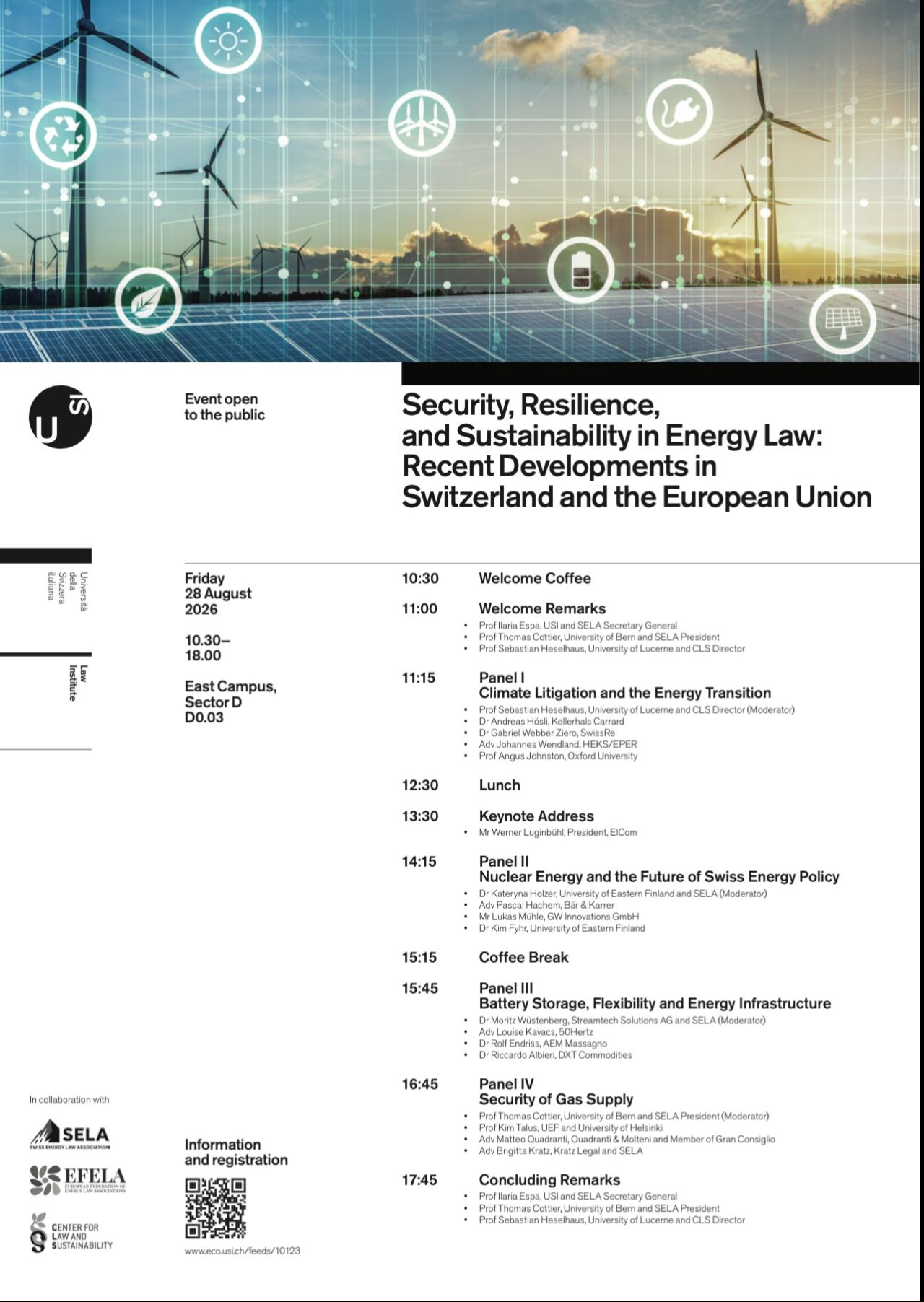
A corporate PPA is often sold as a bilateral hedge attached to a renewable asset: a fixed or indexed price on one side, “green” volumes on the other, and a reassuring narrative that volatility has been replaced by contract. That narrative survives only at a high level of abstraction. Performance is produced inside a system that insists on its own categories and disciplines, above all balance groups, mandatory scheduling, deviation settlement and system services. The hidden trading layer is not an interpretive flourish. It is the operational and financial chain of forecasting, nomination, intraday adjustment, portfolio netting and settlement that converts intermittent generation into hedge-relevant delivery.

This matters because the settlement baseline is not annual but granular. Balancing energy is defined against the deviation between confirmed schedules and metered values and settled at 15-minute resolution, with the regime explicitly framed as an incentive system designed to keep deviations “as low as possible”. Once this baseline is accepted, “hedge performance” cannot be located in the strike price alone. It is a property of the chain that determines how generation and load are translated into schedules, how residual volumes are traded close to delivery, and how deviations are attributed and priced when reality diverges from plan.

The broader point is structural. Electricity risk is not eliminated by long-term contracting; it is transformed. Scarcity, network constraints, and episodic liquidity thinning embed non-linearities and tail outcomes into the system, so the central question becomes how risk is redistributed across instruments, time scales and counterparties (Billimoria, F., Mays, J., & Poudineh, R. (2024). Risk hedging in electricity markets. Oxford: Oxford Institute for Energy Studies). A corporate PPA behaves like a hedge only when it contracts the transformation layer that links intermittent production to the buyer’s load and to the balancing regime that monetises deviations.

I. The hidden trading layer as the hedge’s production function

The hidden trading layer can be described, without metaphor, as the hedge’s production function. It performs three conversions that are often compressed into a single “delivery” sentence in term sheets, and then reappear as cost drivers in settlement.

First, shaping and firming: the conversion of a stochastic generation process into a delivery profile that is meaningful relative to the buyer’s load. The relevant object is not annual MWh but a time series of net positions, because the buyer’s all-in procurement cost is driven by the residual position that remains after the PPA is netted against consumption.

Second, nomination and scheduling: the conversion of commercial intent into system-recognised schedules. This interface is governed by procedural and information-system constraints, and the position that matters for settlement is the position nominated and accepted under the balance group discipline.

Third, deviation governance: forecast errors, intraday corrections, metering adjustments, curtailment and operational constraints generate deviations. Deviations are the channel through which intermittency and stress are monetised. A contract that does not allocate deviation categories does not reduce risk; it leaves the system to allocate them by default.

This framing is consistent with the classic insight that electricity markets are coupled institutional arrangements, not single markets: balancing and ancillary services are constitutive, and reform outcomes depend on how these coupled layers are designed and coordinated (Jamasb, T., & Pollitt, M. (2005). Electricity market reform in the European Union: Review of progress toward liberalization and integration. The Energy Journal, 26(Special Issue), 11-41). The shift toward variable renewables tightens that coupling by relocating system value toward timing and flexibility, making the interface between short-term markets, network constraints and investment incentives economically central (de Vries, L. J., & Verzijlbergh, R. A. (2018). How renewable energy is reshaping Europe’s electricity market design. Economics of Energy & Environmental Policy, 7(2), 31-50).

II. Volume risk decomposed: resource risk, profile risk, and settlement risk

“Volume risk” is commonly treated as a single exposure: underproduction relative to expectation. Operationally, that is too coarse. A coherent allocation requires separating three exposures, because each is controlled differently and priced differently.

Resource and availability risk is the stochastic uncertainty in output driven by meteorology and technical performance. This is the exposure most readily addressed with warranties, floors, caps and proxy constructs.

Profile (shape) risk is the misalignment between the hourly distribution of generation and the buyer’s load. Even when annual MWh match expectations, a structurally wrong profile creates systematic residual positions that must be traded in day-ahead and intraday markets, often in hours where spreads widen. Quantitative work treats PPA books as portfolios and shows that diversification across assets and technologies can measurably reduce financial risk and improve match quality with demand, turning “multi-asset structuring” into a risk-control technique rather than a narrative preference (Gabrielli, P., Aboutalebi, M., & Sansavini, G. (2022). Mitigating financial risk of corporate power purchase agreements via portfolio optimization. Energy Economics, 110, 106028).

Settlement (imbalance) risk arises from the discipline imposed by the balancing regime: deviations between confirmed schedules and metered values are monetised at a fine temporal resolution. This means forecasting quality, nomination discipline and timing of intraday adjustment are first-order financial drivers. Evidence from balancing market microstructure reinforces why this cannot be treated as a back-office matter: information flows and disclosure lags can shape the ability to anticipate system imbalance and can generate strategy value tied to timing and proximity to delivery (Bunn, D. W., & Kermer, S. O. E. (2021). Statistical arbitrage and information flow in an electricity balancing market. The Energy Journal, 42(5), 19-40). The contractual implication is precise: whoever controls forecasting and intraday steering controls a variable that affects both the mean and variance of imbalance outcomes.

A serious corporate PPA therefore needs to state which of these risks are borne by the buyer, which are delegated to a sleeve provider, and which are capped, benchmarked or insured. Otherwise allocation is left to default settlement economics and to informational asymmetry.

III. Shaping costs as basis risk: the monetisation of mismatch

Shaping costs are better understood as the monetisation of basis risk: the spread between the PPA’s generation profile and the hedge-relevant delivery profile implied by the buyer’s load and the balancing regime. Shaping is path-dependent. It depends on intraday volatility and liquidity, forecasting accuracy, technology seasonality, and critically the portfolio context of the shaper. A party with a broad portfolio can net residual positions and reduce exposure; a standalone buyer typically cannot.

This is why sleeving is not a cosmetic intermediary layer but an economic choice about who holds operational control over forecasting, nominations, balancing interface management and residual procurement. A flat sleeve fee can look like stability, yet if the buyer lacks data rights and ex post reconstruction capability, the fee behaves as a discretionary product whose embedded option value grows with volatility. The long-tenor hedging literature is clear that electricity risk markets can remain incomplete, so long-term contracts are often asked to substitute for missing hedging instruments, which makes auditability and governance part of hedge quality rather than an administrative preference (Billimoria, F., Mays, J., & Poudineh, R. (2024). Risk hedging in electricity markets. Oxford: Oxford Institute for Energy Studies).

IV. Imbalance and control energy: institutions determine the cost surface

Imbalance settlement is an incentive mechanism. The corporate rarely sits as a balance group manager, but it bears costs through contractual pass-throughs. If imbalance is passed through without allocating operational control and without caps or benchmarking, the buyer acquires uncapped exposure to a cost category designed to be consequential.

Comparative evidence is useful because it shows that balancing outcomes are not dictated by physics alone. German data suggests that contracted control power reserves and procurement costs can decline even as variable renewables expand, implying that forecasting quality, product design, market rules and TSO cooperation can materially shape reserve procurement and cost outcomes (Hirth, L., & Ziegenhagen, I. (2013). Control power and variable renewables: A glimpse at German data. Milan: Fondazione Eni Enrico Mattei). The implication is that imbalance exposure is a policy and institutional object, likely to evolve over a long PPA horizon. That evolution should be recognised contractually through governance, transparency and risk limits rather than absorbed as an undefined pass-through.

The informational point is not academic. Where imbalance outcomes are sensitive to timing and to intraday action, and where information flows can generate strategy value, data rights and control over forecasting and nominations become economic clauses (Bunn, D. W., & Kermer, S. O. E. (2021). Statistical arbitrage and information flow in an electricity balancing market. The Energy Journal, 42(5), 19-40).

V. Regulatory exposure: tariff stack, policy instruments, and market design drift

A PPA strike price is not an all-in hedge number. The all-in procurement cost includes the system cost stack and its evolution. Reserve instruments and tariff components are explicit and politically salient. The tariff stack includes reserve-related components such as a power reserve tariff and has been publicly communicated for the transmission grid. A long-term contract that treats these elements as generic pass-throughs, rather than mapping them to defined categories with specified change mechanisms, is structurally fragile: it cannot protect the buyer against redesign, reclassification or expansion of system cost instruments.

Policy trajectory matters because it shapes the cost stack and incentives for flexibility. The Federal Act on a Secure Electricity Supply from Renewable Energy Sources reshapes arrangements for production, transport, storage and consumption, with staged entry into force and acknowledged implementation uncertainty. Reserve instruments, including winter reserve measures, affect the cost stack and scarcity dynamics that shape residual procurement and imbalance pricing.

European market design drift matters because the system is embedded in European flows and price formation. Recent analysis identifies supply-demand mismatch risk in systems with rapid renewable deployment and de-risking schemes, with distributional and political implications (Heussaff, C., & Zachmann, G. (2024). The changing dynamics of European electricity markets and the supply-demand mismatch risk. Brussels: Bruegel. ). Integration research shows time-varying volatility connectedness across neighbouring markets (Do, H., Nepal, R., & Jamasb, T. (2020). Electricity market integration, decarbonisation and security of supply: Dynamic volatility connectedness in the Irish and Great Britain markets. Cambridge: Energy Policy Research Group, University of Cambridge). Policy work on consumer-led transition underscores the centrality of flexibility and demand-side participation ( E3G. (2016). Consumer-led energy transition: Leveraging the actions of progressive energy consumers to deliver the EU energy system of the future. London: E3G.).

Regulatory exposure is not only statutory change; it is also enforcement and institutional incentives. Political economy analysis reminds that enforcement capacity can be shaped by stakeholder dynamics and institutional constraints (Maggetti, M. (2019). Interest groups and the (non-)enforcement powers of EU agencies: The case of energy regulation. European Journal of Risk Regulation, 10(3), 458-484). Over a 10-15 year horizon, this affects the probability that rule application and tolerated practices drift, with real cost implications.

VI. Contract architecture: aligning private allocation with public settlement and measurable risk metrics

If the goal is an effective hedge, the contract architecture must align private-law allocation with public-law settlement reality.

First, specify settlement granularity and residual valuation logic in a way that is coherent with the system definition of deviation. If the contract settles annually or monthly, it should state explicitly how that settlement maps onto deviation settlement at the system level, and which party bears the basis risk created by that mapping.

Second, treat shaping as a priced transformation with traceability. Where shaping is delegated, specify reference markets or indices for residual procurement, allocation methodology, the information set used for forecasting, nomination timing, and the buyer’s data rights to reconstruct decisions ex post. A hedge transformation that cannot be audited is, economically, a discretionary product.

Third, use measurable risk metrics rather than rhetorical risk. Portfolio optimisation results support diversification as a risk-control method (Gabrielli, P., Aboutalebi, M., & Sansavini, G. (2022). Mitigating financial risk of corporate power purchase agreements via portfolio optimization. Energy Economics, 110, 106028). Risk-based valuation highlights the relevance of quantifying credit risk and expected loss for guarantees and collateral design (Pombo-Romero, J., Rúas-Barrosa, A., & Vázquez, M. (2024). Assessing the value and risk of renewable PPAs: A risk-based approach. Energy Economics, 135, 107264). Balancing market microstructure supports treating information, timing and control as economic variables (Bunn, D. W., & Kermer, S. O. E. (2021). Statistical arbitrage and information flow in an electricity balancing market. The Energy Journal, 42(5), 19-40).

Fourth, map regulatory pass-throughs to defined tariff categories and policy instruments, and draft change mechanisms capable of capturing redesign and reclassification of system cost components, not only formal statutory amendments.

Conclusion: the hedge is the trading layer

A corporate PPA is not a bilateral abstraction. It is a structured interface between private allocation and system settlement. The hidden trading layer is the hedge’s production function. If it is priced, governed and auditable, the contract behaves as a risk-reducing instrument because it controls the channels through which intermittency becomes cashflow (Billimoria, F., Mays, J., & Poudineh, R. (2024). Risk hedging in electricity markets. Oxford: Oxford Institute for Energy Studies). If it is left implicit, the contract behaves as a long-dated position whose volatility surfaces under stress, when imbalance regimes bite and informational control over forecasting and nominations becomes decisive (Bunn, D. W., & Kermer, S. O. E. (2021). Statistical arbitrage and information flow in an electricity balancing market. The Energy Journal, 42(5), 19-40; Hirth, L., & Ziegenhagen, I. (2013). Control power and variable renewables: A glimpse at German data. Milan: Fondazione Eni Enrico Mattei; Heussaff, C., & Zachmann, G. (2024). The changing dynamics of European electricity markets and the supply-demand mismatch risk. Brussels: Bruegel. ).

The conclusion is austere, but it is accurate. The hedge is not the headline price. The hedge is the trading layer. The only serious question is whether the contract governs that layer as an object of measurable risk, or whether it discovers it through settlement.


SELA Annual Meeting 2025

We would like to extend a warm thank you to all speakers, moderators and participants for their contributions to the SELA Annual Meeting 2025, held on 27 November at the Università della Svizzera italiana (USI) in Lugano. The event, jointly organised by SELA, USI and the La Suisse en Europe Association (ASE), focused on “The EU–CH Electricity Agreement: Implications for Switzerland.”

Through a dialogue among lawyers, academics and technical experts, the meeting unpacked the key legal, institutional and operational questions raised by the prospective implementation of the Agreement, set against the broader evolution of EU-Swiss relations. Opening remarks by Prof Dr Thomas Cottier and Prof Dr Ilaria Espa highlighted why electricity has become central to wider debates on sovereignty, interdependence, security of supply and market design, and why SELA remains a key forum for open stakeholder exchange. EFELA’s Secretary General, Adv Marinella De Focatiis, also stressed the value of anchoring the Swiss discussion within the wider EFELA network.

The first panel situated the Agreement in the European context and clarified core issues of market integration, dynamic alignment and practical misunderstandings, including the implications for cross-border capacity, market coupling, crisis coordination, and the contours of state-aid and dispute-settlement discussions. It was confirmed that the Agreement respects cantonal water rights and does not require EU-wide tenders for future concessions.

The second panel moved to system operations, reserves and contracts: speakers discussed how renewables are reshaping grid management, why predictable transmission capacity matters, how winter reserves may evolve under a more integrated framework, and what the Agreement could mean for Swiss PPAs and risk allocation.

The final panel focused on liberalisation, trading and commercial operations, addressing consumer protection, utility transformation (including risk management and IT systems), and the compliance implications of REMIT-like transparency and market integrity rules for Swiss-based trading activity.

Overall, the discussions did not aim to produce a single “SELA view”, but to clarify the main questions Switzerland will face if the Agreement enters into force. Several contributions pointed to benefits for security of supply, grid stability and investment. At the same time, speakers underlined that a structured framework would require coherent domestic choices. One conclusion was clear: without an agreement, securing stable supplies, especially in winter, is likely to remain difficult and costlier, and cross-border trading from Switzerland more constrained.

Materials:

Brauchli_Generation, Supply and Transmission of Electricity

Cottier_SELA Panel 1 TC

Heselhaus_Thoma_Presentation_SH_ST_final

Hachem_20251127 Energy Law Conference Lugano

Endriss_SELA USI Lugano 27.11.2025 RE notes

Endriss_AEM USI SELA 2025

Parola_Slide SELA_27.11.25